About Creative Tech NZ
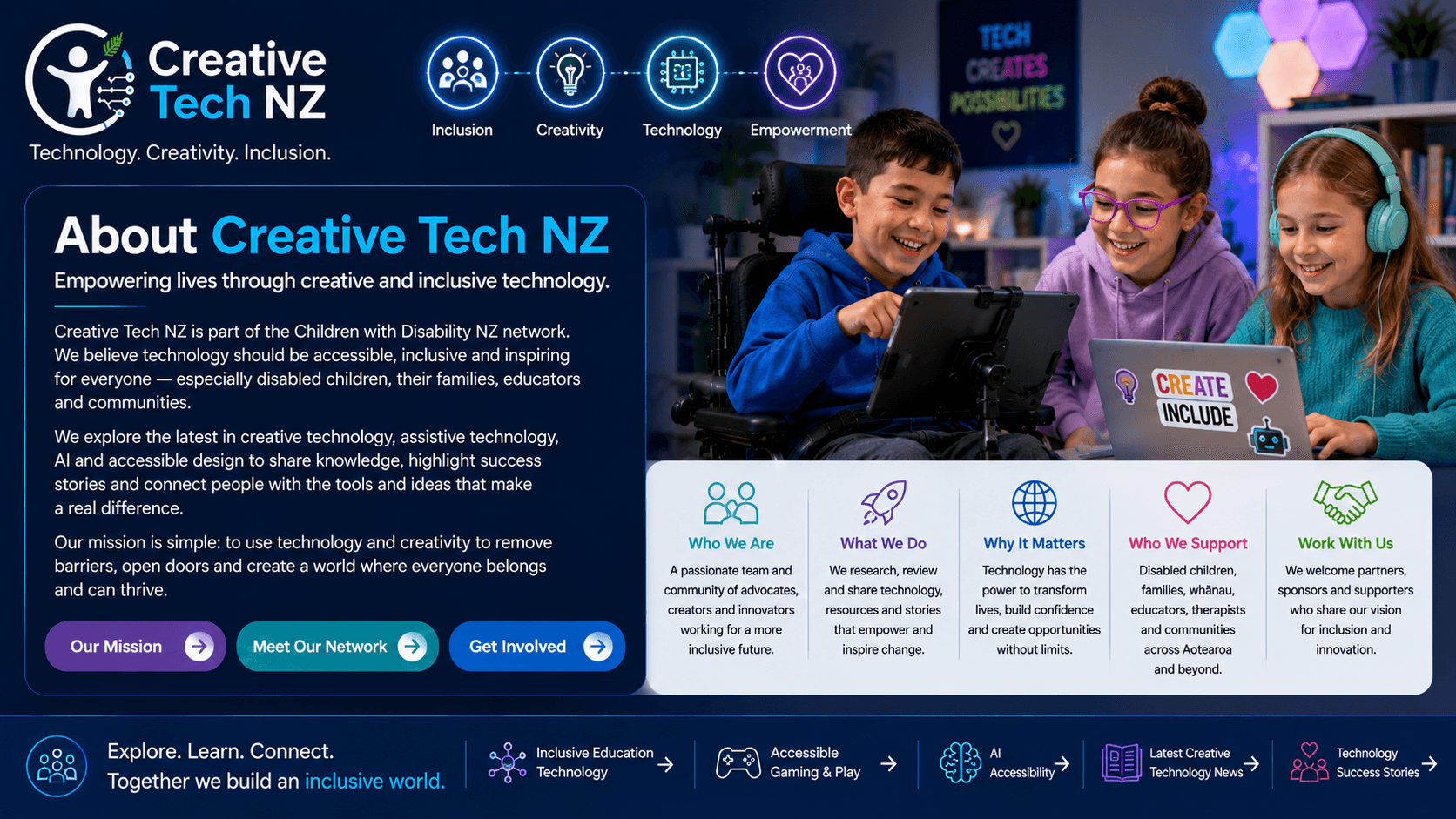
Creative Tech NZ is a New Zealand-based resource exploring how creative technology, assistive technology, AI and accessible design can improve the lives of disabled people, with a special focus on disabled children and their whānau.
Why Creative Tech NZ Exists
Technology is changing quickly, but disabled people are too often left out of the conversation. Creative Tech NZ exists to help bring disability, accessibility and inclusion into the centre of technology discussions.
This website focuses on practical ideas, useful tools, real stories and emerging innovations that can support communication, learning, creativity, mobility, sensory needs, education, play and participation.
A Focus on Disabled Children
Disabled children deserve access to technology that helps them communicate, learn, play, create and be included. The right technology can give a child more ways to express themselves, join in with others, develop confidence and take part in everyday life.
Creative Tech NZ places disabled children at the heart of this work because early access to the right tools can make a lifelong difference.
Built From Lived Experience
Creative Tech NZ has been developed by Glen McMillan, a disabled disability advocate and CEO of Children with Disability NZ. The website is shaped by lived experience, advocacy, website development, accessibility work and a strong belief that disabled people should be included in the design of the tools and systems that affect their lives.
This is not simply a technology website. It is a disability inclusion resource that asks how technology can be used to reduce barriers and improve real outcomes for disabled people.
What We Cover
- AI and accessibility
- Assistive technology
- Creative technology for disabled children
- Inclusive education technology
- Sensory technology
- Accessible gaming and play
- Communication tools and creative expression
- Real stories from families, teachers and disabled people
Technology Should Include Everyone
Creative Tech NZ believes technology should not only be innovative. It should be accessible, useful and shaped by the people who need it most. When disabled people are included from the beginning, technology can become a powerful tool for independence, creativity, learning and belonging.