AI & Accessibility
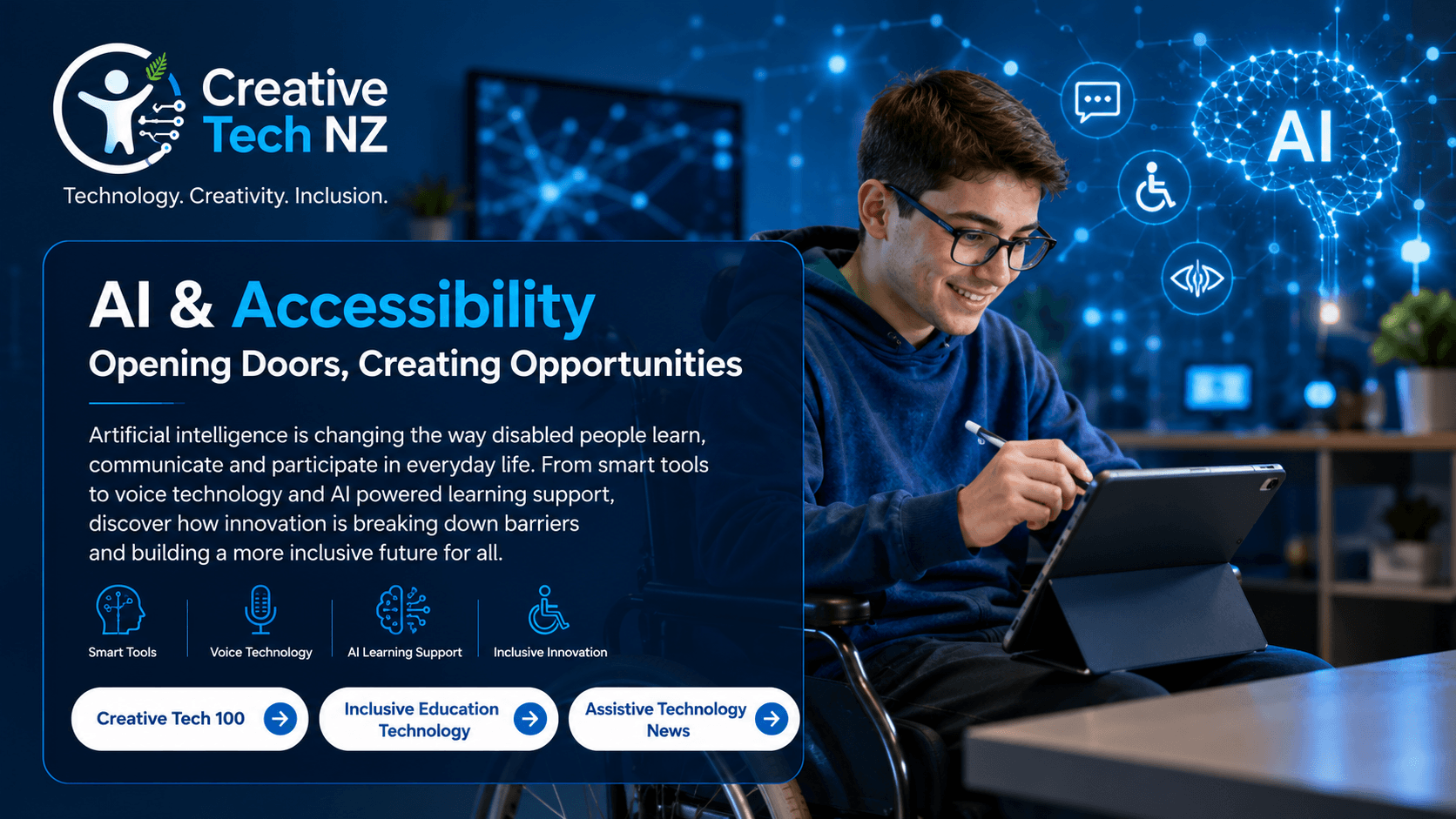
Artificial intelligence is changing the way disabled people communicate, learn, create, work and participate in everyday life. For disabled children, AI has the potential to open new doors by supporting communication, literacy, learning, creativity, independence and inclusion.
How AI is Transforming Life for Disabled People
AI is increasingly being used to support disabled people in practical, everyday ways. Speech-to-text tools can help people who find typing difficult. Text-to-speech tools can support people with reading barriers, vision impairments or learning differences. Image recognition can describe visual information, while smart assistants can help with reminders, planning and daily routines.
For many disabled people, technology is not simply about convenience. It can support independence, confidence and participation. When AI is designed accessibly, it can reduce barriers and help disabled people take part more fully in education, employment, creativity, communication and community life.
AI Tools for Disabled Children
Disabled children can benefit from AI when it is used carefully, safely and with the right support. AI tools may help children practise reading, turn speech into written text, create stories, explore music, generate images, communicate ideas or access learning in a way that better suits their needs.
Some children may use AI to help organise thoughts before writing. Others may use voice tools, visual supports, captions, simplified text or creative apps to express themselves. The goal should never be to replace human support, but to give disabled children more ways to participate, create and be understood.
AI and Inclusive Education
Inclusive education is about making sure every child has the opportunity to learn, belong and take part. AI can support this by helping teachers provide information in different formats, including audio, captions, visual prompts, simplified reading material and personalised learning activities.
In the classroom, AI may help remove some of the barriers that disabled students face. It can support literacy, communication, planning, note-taking and creative expression. Used well, AI can help schools move away from a one-size-fits-all approach and towards learning environments where more children can succeed.
Technology Should Include People
AI should not be seen only as a future technology. It is already changing lives now. The challenge is to make sure disabled people, disabled children, families, whānau and educators are included in the conversation from the beginning. Creative Tech NZ exists to explore these possibilities and share ideas that can make technology more inclusive, practical and human.
Technology, Accessibility and the New Zealand Election 2026
Technology has the power to remove barriers and create opportunities for disabled people. Decisions made by government influence funding for assistive technology, digital accessibility, inclusive education, employment and innovation. Our Elections 2026 resource explores the disability policies that could shape New Zealand's technological future.
AI, Accessibility and Innovation
Explore how government policy could influence artificial intelligence, accessibility, digital inclusion and emerging technologies for disabled New Zealanders.
Explore Digital InclusionInclusive Education
Learn about disability policy, technology in education, learning support and opportunities for disabled children and students.
View Education IssuesTechnology, Employment and Independence
Discover how disability policy affects employment, assistive technology, income support, innovation and independent living.
Learn MoreElection News
Stay informed about disability policy announcements, election developments and technology-related accessibility initiatives throughout the 2026 campaign.
Latest Election NewsExplore our independent Elections 2026 Disability Hub for political party policies, disability legislation, community perspectives, accessibility issues and election news affecting disabled New Zealanders.
Explore the Elections 2026 Disability Hub