Inclusive Education Technology
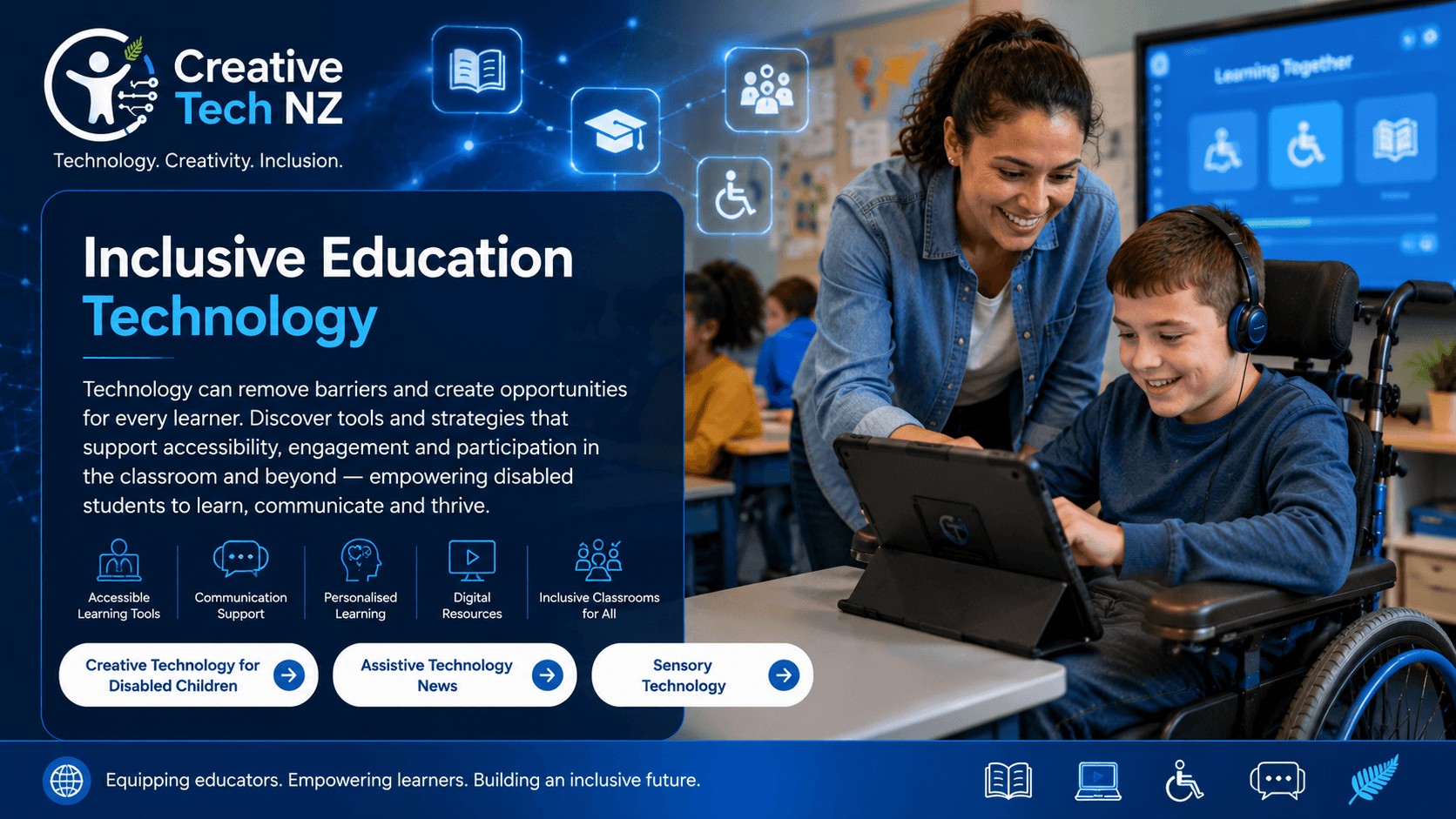
Inclusive education technology helps disabled children access learning in ways that match their strengths, needs and communication styles. The right tools can support participation, confidence, creativity and belonging in the classroom.
Technology in the Inclusive Classroom
Inclusive classrooms recognise that children learn in different ways. Technology can help teachers present information through text, audio, images, captions, video, touchscreens and interactive activities. This gives more students the chance to understand, respond and take part.
For disabled children, classroom technology can remove barriers that might otherwise stop them from joining in. A child who struggles with handwriting may use speech-to-text. A child who finds reading difficult may use text-to-speech. A child who communicates differently may use symbols, visual supports or communication software.
Technology works best when it is combined with inclusive teaching and practical learning resources. Teachers and schools can also explore inclusive classroom activities for children that support participation, disability awareness and belonging alongside accessible technology.
Digital Accessibility for Schools
Digital accessibility means making sure online learning platforms, school websites, documents, videos and classroom resources can be used by disabled students. This includes readable fonts, clear layouts, captions, keyboard access, screen reader support and content that is easy to understand.
Accessibility should not be added only after a student is excluded. It should be part of good design from the beginning. When schools create accessible digital resources, they support disabled students, neurodiverse learners, families, teachers and the wider school community.
Accessible downloadable resources can also give children more ways to learn on computers and tablets. The Children's PDFs at Inclusive Education NZ provide another option for families and educators looking for child-friendly digital learning materials.
Supporting Neurodiverse Learners Through Technology
Neurodiverse learners may benefit from technology that supports structure, communication, sensory regulation, reading, writing, memory and focus. Visual schedules, timers, audio tools, planning apps, simplified text, creative software and sensory-friendly learning resources can all help.
The best technology does not force every child to learn the same way. It gives children options. Some children may need quiet digital activities, while others may learn best through movement, visuals, music, storytelling or hands-on interaction.
Families, teachers and schools looking for additional sensory learning resources can also explore Sensory Sensations , which provides child-friendly resources around sensory differences, learning and participation.
Inclusive Learning Resources Beyond Technology
Accessible technology is an important part of inclusive education, but technology is only one part of the picture. Children also need learning materials that represent disability positively, support different ways of learning and encourage participation alongside their peers.
Inclusive Education NZ provides downloadable and digital resources created for children, families, teachers and schools, complementing the accessible technology information available through Creative Tech NZ.
Inclusive Classroom Activities
Practical activities that help teachers encourage participation, inclusion, disability awareness and positive classroom experiences.
Explore Classroom Activities ↗Children's PDFs
Downloadable resources that can be used on tablets, computers or in print to support learning at school and at home.
Explore Children's PDFs ↗Sensory Sensations
Inclusive sensory resources that help children and adults better understand sensory differences, needs and ways of learning.
Explore Sensory Sensations ↗Learning Should Be Accessible
Inclusive education technology is not about giving disabled children something extra. It is about giving every child a fair chance to access learning, express ideas and be included alongside their peers.
Technology, Accessibility and the New Zealand Election 2026
Technology has the power to remove barriers and create opportunities for disabled people. Decisions made by government influence funding for assistive technology, digital accessibility, inclusive education, employment and innovation. Our Elections 2026 resource explores the disability policies that could shape New Zealand's technological future.
AI, Accessibility and Innovation
Explore how government policy could influence artificial intelligence, accessibility, digital inclusion and emerging technologies for disabled New Zealanders.
Explore Digital InclusionInclusive Education
Learn about disability policy, technology in education, learning support and opportunities for disabled children and students.
View Education IssuesTechnology, Employment and Independence
Discover how disability policy affects employment, assistive technology, income support, innovation and independent living.
Learn MoreElection News
Stay informed about disability policy announcements, election developments and technology-related accessibility initiatives throughout the 2026 campaign.
Latest Election NewsExplore our independent Elections 2026 Disability Hub for political party policies, disability legislation, community perspectives, accessibility issues and election news affecting disabled New Zealanders.
Explore the Elections 2026 Disability Hub