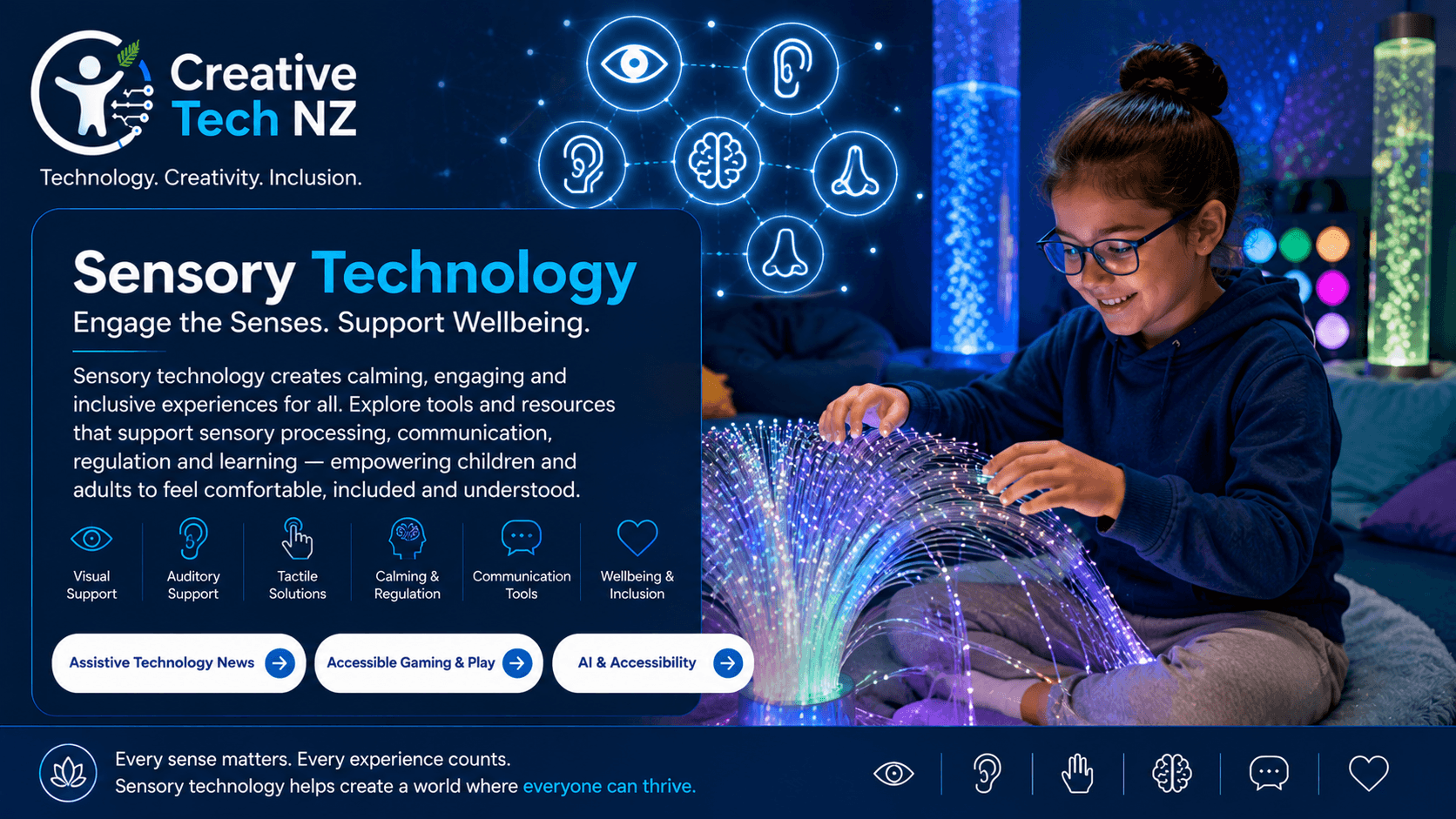
Sensory Technology
Sensory technology uses creative and innovative tools to support how people experience the world through their senses. From interactive lighting and calming environments to virtual reality and sensory apps, technology can help create more accessible and inclusive experiences for disabled children and adults.
Sensory Rooms and Digital Learning
Modern sensory rooms are increasingly using technology to create engaging, calming and interactive experiences. Projectors, interactive walls, sound systems, fibre optic lighting, touch-responsive displays and immersive environments can help children explore, learn and regulate sensory input in a safe way.
Sensory technology can also be used in classrooms, libraries, therapy spaces and community settings. When designed thoughtfully, these environments can support focus, communication, emotional regulation and participation.
Virtual Reality and Sensory Experiences
Virtual Reality (VR) is creating new opportunities for learning, exploration and skill development. Children can visit places they may never physically access, practise social situations, explore nature, learn life skills or participate in educational experiences through immersive technology.
While VR is not suitable for everyone, many disabled people are finding new ways to engage with learning and creativity through carefully designed virtual experiences that can be tailored to individual needs.
Interactive Sensory Technology
Interactive sensory technology combines movement, sound, touch, light and digital content to create engaging experiences. Examples include interactive floors, motion-activated games, sensory walls, responsive projections and touchscreen activities.
These tools can encourage movement, communication, creativity and social interaction. They can also provide opportunities for children of different abilities to participate together, helping create more inclusive play and learning environments.
Technology That Engages the Senses
Sensory technology is not simply about gadgets or equipment. It is about creating experiences that help people connect, learn, communicate and participate. As technology continues to evolve, new opportunities are emerging to make sensory experiences more accessible, engaging and inclusive for everyone.